
Muddy Frogpond . Matschspielplatz
Contact . Legal Notice
© 2026 Wallow World by Muddy Frogpond Comics
Muddy Frogpond . Matschspielplatz
Contact . Legal Notice
© 2026 Wallow World by Muddy Frogpond Comics

Educational Evidence: Fostering Development and a Connection to Nature
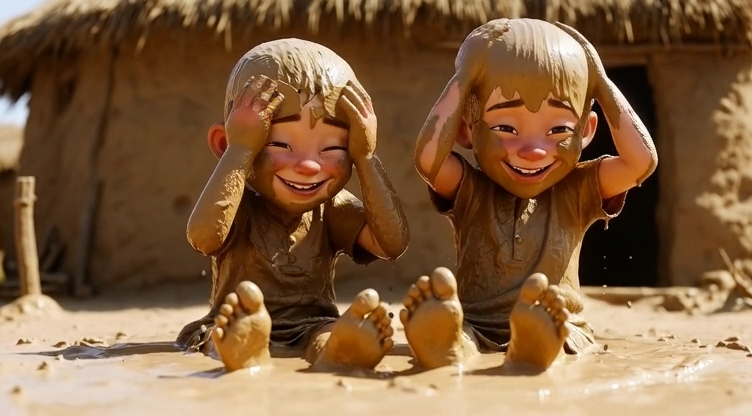
From an educational perspective, barefoot mud play is recommended in approaches such as forest kindergartens or outdoor education programs because it supports sensory, cognitive, and emotional development. It symbolizes a connection to nature by encouraging children to directly feel the earth and experience it as part of the environment – away from sterile surroundings. Sensory and motor development: Barefoot stimulation activates thousands of nerve endings in the feet, improving motor skills, balance, and coordination. Studies show that early barefoot walking (e.g., on mud or grass) promotes natural muscle patterns and boosts brain development – up to 90% of the brain develops in the first six years through such stimuli. Pädagogische Belege: Förderung von Entwicklung und Naturverbundenheit
Pädagogisch wird barfußes Matsch-Spiel in Ansätzen wie Waldkindergärten oder Outdoor-Education empfohlen, da es sensorische, kognitive und emotionale Entwicklung unterstützt. Es symbolisiert Naturverbundenheit, indem es Kinder ermutigt, die Erde direkt zu spüren und als Teil der Umwelt zu erleben – weg von sterilen Umgebungen.Sensorische und motorische Entwicklung: Barfußstimulation aktiviert Tausende Nervenenden in den Füßen, was Motorik, Balance und Koordination verbessert. Studien zeigen, dass frühes Barfußlaufen (z. B. auf Matsch oder Gras) natürliche Muskelmuster fördert und Gehirnentwicklung boostet – bis zu 90% des Gehirns entwickelt sich in den ersten sechs Jahren durch solche Reize.
Mud play engages all the senses (texture, smell, sound), which trains sensory processing and strengthens fine motor skills.
Cognitive and creative development: Open-ended mud play without rules promotes problem-solving, creativity, and language development—children build mud castles or paint with mud, which stimulates their imagination.
It also strengthens the immune system (through contact with microbes), boosts happiness (serotonin increase), and supports brain development.
Emotional and social aspects with a connection to nature: Such play builds self-confidence, resilience, and a deep connection to the earth—children learn that "dirt" is positive and that nature has healing properties.
In urban settings, it helps children experience nature and find emotional relief.
Symbolically, it represents freedom and authenticity, as in Montessori approaches, where amorphous materials like mud attract young children.
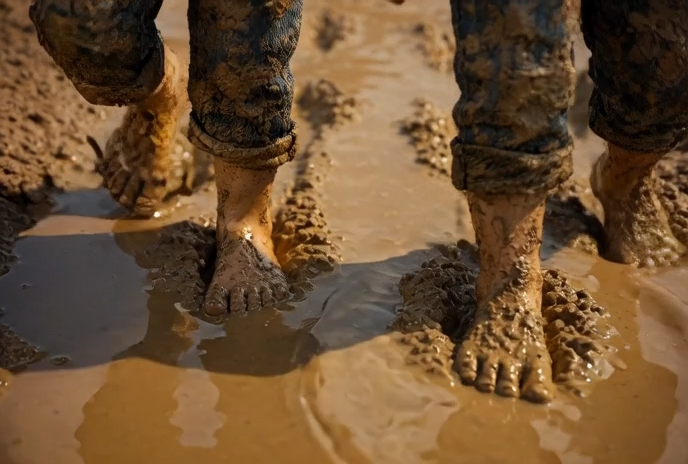
Matsch-Spiel engagiert alle Sinne (Textur, Geruch, Klang), was sensorische Verarbeitung schult und Feinmotorik stärkt.
Kognitive und kreative Förderung: Offenes Matsch-Spiel ohne Regeln fördert Problemlösen, Kreativität und Sprache – Kinder bauen Schlammburgen oder malen mit Matsch, was Fantasie anregt.
Es stärkt auch das Immunsystem (durch Mikrobenkontakt), macht glücklich (Serotonin-Boost) und unterstützt Gehirnentwicklung.
Emotionale und soziale Aspekte mit Naturverbundenheit: Solches Spiel baut Selbstvertrauen, Resilienz und eine tiefe Erdverbindung auf – Kinder lernen, dass "Dreck" positiv ist und Natur heilend wirkt.
In urbanen Settings hilft es, die Natur zu erleben und emotionale Entlastung zu finden.
Symbolisch steht es für Freiheit und Authentizität, wie in Montessori-Ansätzen, wo amorphe Materialien wie Schlamm Kleinkinder anziehen.
Quellen:
thebarefoothomeschoolingmom.blogspot.com
mcm.org
naboso.com
montessoriparenting.org